





How to structure product pages for humans and AI
If key product details only live in images or buried copy, AI won’t pick them up – and won’t recommend your product.
If you’re a customer looking at your product page, it probably feels complete.
There’s strong imagery, a thoughtful layout, and messaging that’s designed to convert.
But AI isn’t experiencing any of that the way a person does.
It’s reading your site through structure: your product data, your code, your labeled attributes.
Not your layout or design.
And not text embedded in images.
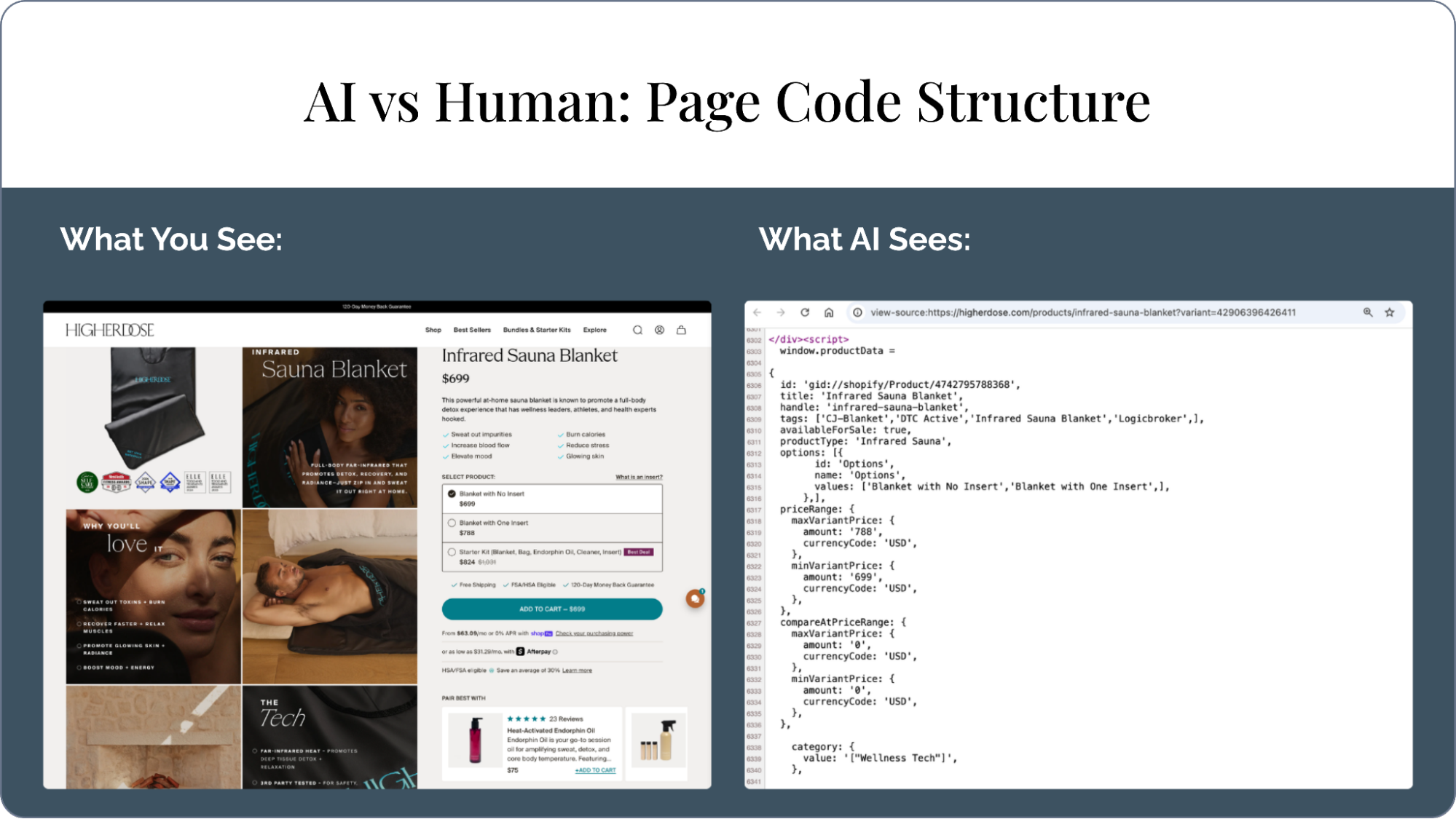
Content that sells isn’t the same as content that AI understands.
So if important information only exists visually, there’s a good chance it’s not being picked up at all.
Most product pages today are built to persuade:
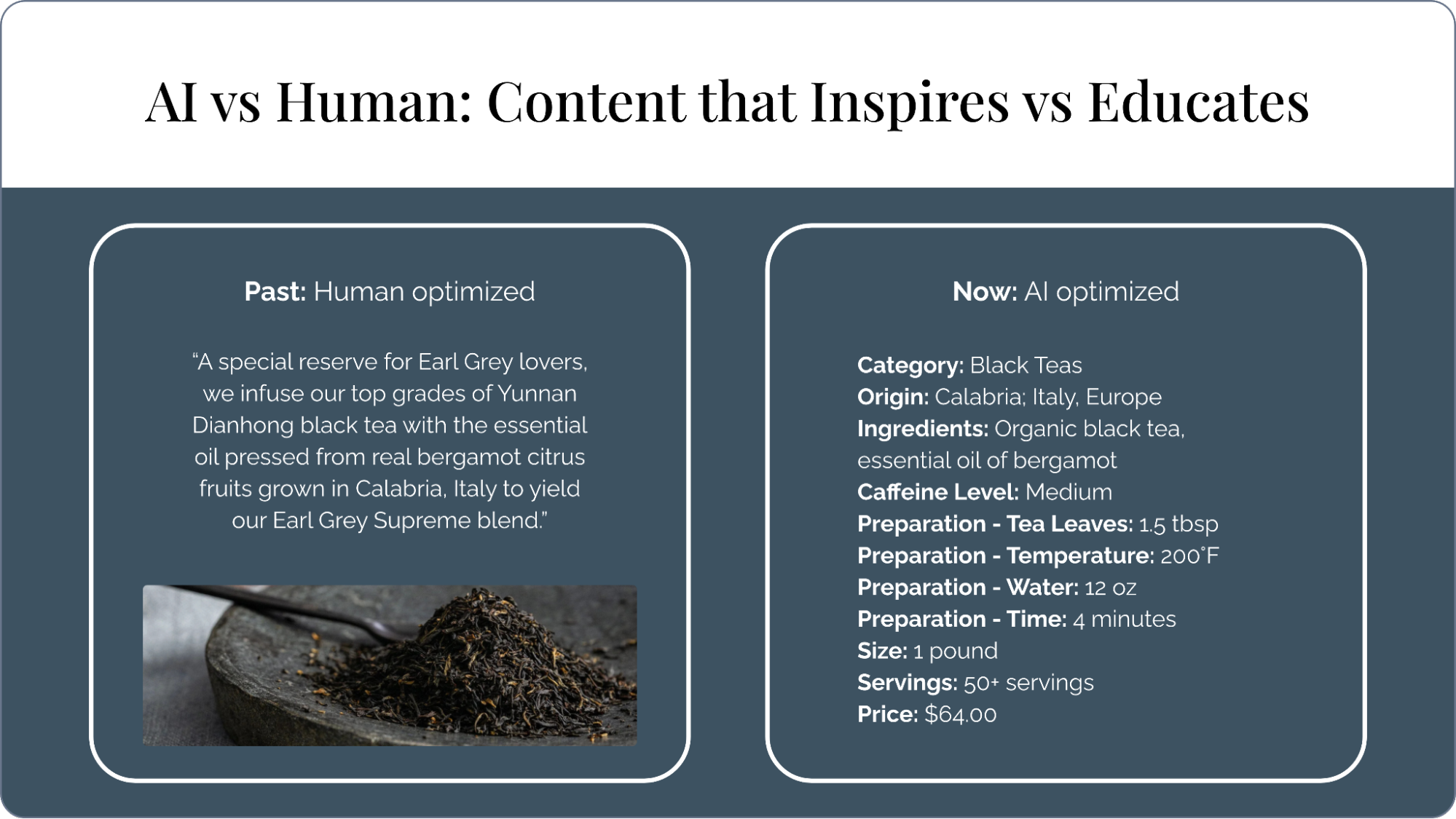
“A special reserve for Earl Grey lovers…” This language creates an emotional connection. Which still matters!
But AI is trying to answer a question.
- What is this?
- Who is it for?
- What are the specs?
- How is it used?
If those answers aren’t obvious, your product becomes harder to retrieve.
What to check on your product pages
This doesn’t mean you need to strip out what makes your brand compelling.
It just means you need to start thinking in two layers:
The front end sells: it tells a story, creates a feeling, drives conversion.
Then the structure explains.
What this looks like in practice:
1. Write out key details instead of implying them.
→ Add a clear one-liner about your product to the top of the page.
2. Standardize your product data:
→ Make sure there’s no missing materials, dimensions, use cases, or naming inconsistencies across products.
3. Pull key information out of images and into text.
→ If it’s only visual, it’s invisible. Break content into sections. No vague headers or long paragraphs.
4. What would someone ask about your product? Put those on the page.
→ Add comparison or clarification blocks:
Who it’s best for, when to choose it, how it differs.
5. Then, zoom out and audit your catalog:
- Are your products clearly categorized?
- Are variants defined consistently?
- Is the data complete?
Because now, that’s what’s being read.