





When to use SMS instead of email (and when not to)
Use SMS when customers care more about timing than persuasion.
A good example is back-in-stock alerts.
A shopper already decided they wanted a specific product. They gave you their phone number because they don’t want to miss it.
That’s high intent.
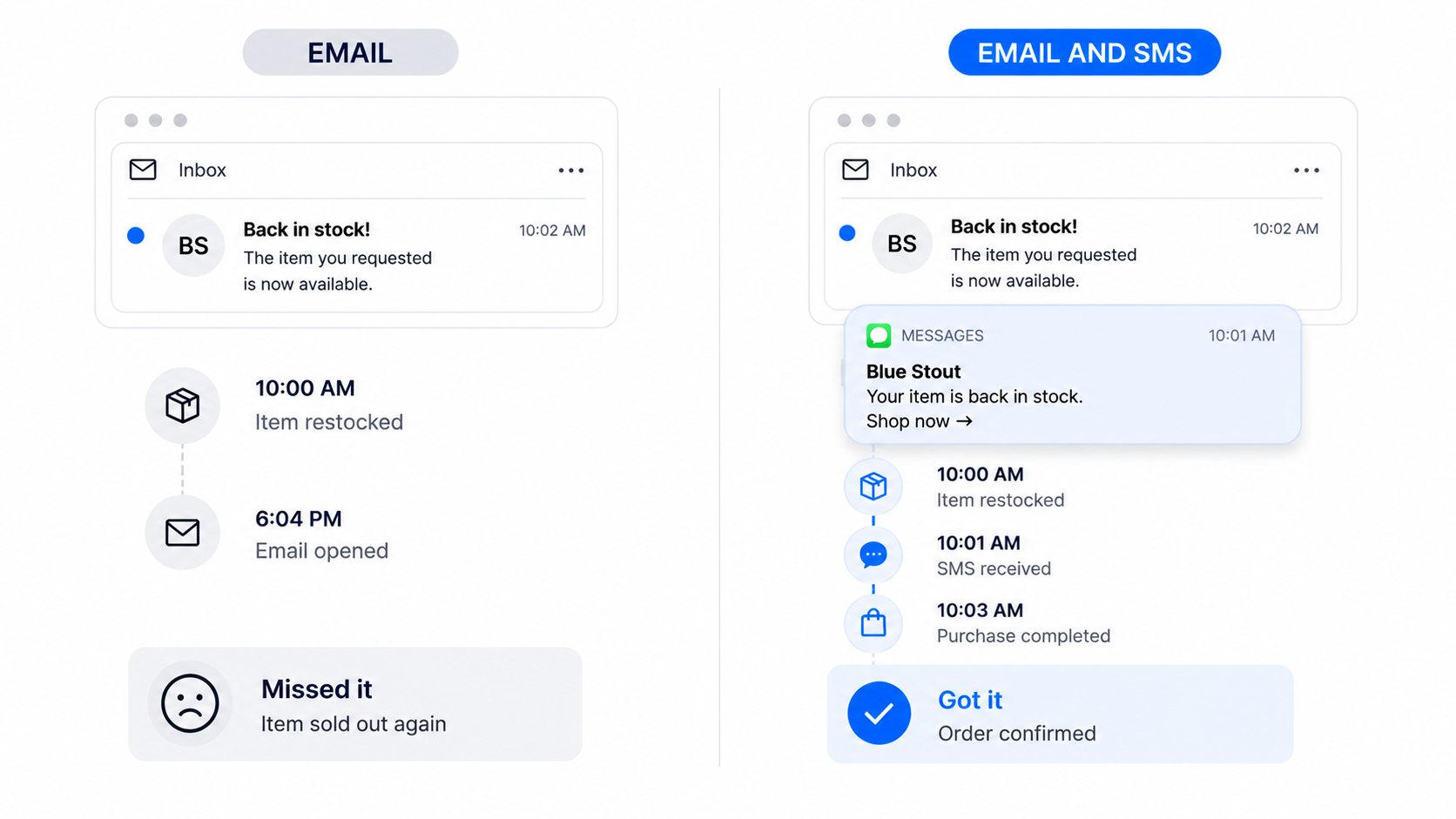
But if the product restocks at 10 a.m. and sells out by lunch, checking an email after work doesn’t help.
In one example, sending both email and SMS for back-in-stock alerts lifted SMS conversion to 8.5%, compared to 7.9% for email.
The customer already wanted the product.
SMS simply helped them act in time.
Early access creates the same opportunity.
Customers join waitlists and VIP lists because they want to know first.
If you promise early access to a limited drop, give them the option to get a text when it goes live. And actually follow through.
They’ve already told you they don’t want to miss it.
Don’t make them rely on email alone.
Action Item
Review your last 5 SMS campaigns.
For each one, ask:
Would this message lose value if customers didn’t see it for six hours?
If the answer is yes, SMS is probably the right channel.
If the answer is no, email may be the better choice.